Ihram and its rules · لبس الإحرام
How to wear ihram
The two cloths a man wears, how a woman dresses, and where on the way the right shoulder is uncovered and covered again.
What ihram clothing is
A man in ihram wears two plain cloths that are not tailored to the body: the izar round the waist and the rida over the shoulders. A woman has no special garment: she wears her ordinary modest clothes.
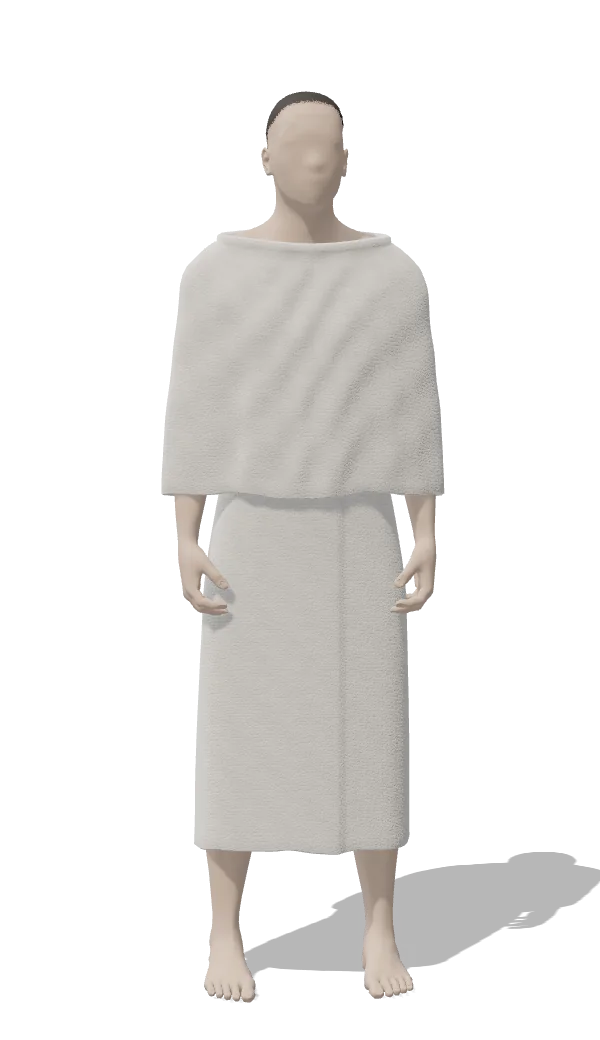 A man: izar and rida
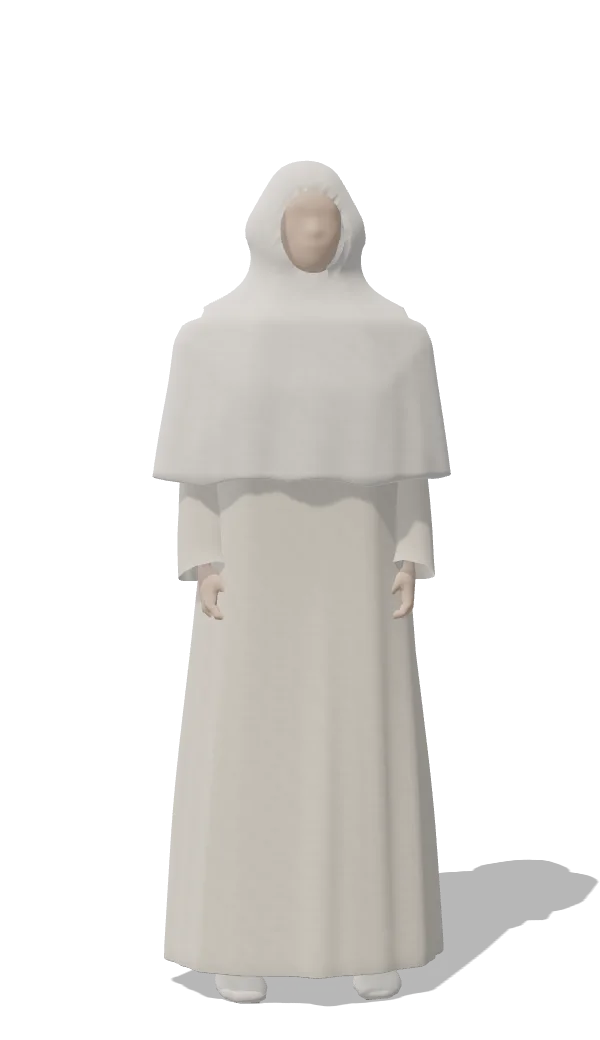 A woman: her modest clothes
The clothing is not the ihram
- Ihram is the state you enter by intending Umrah at the miqat. The clothing is only its dress.
- Putting the cloths on does not put you in ihram. You may dress at home or at the airport and make the intention at the miqat.
- Once you have made the intention, the rules of ihram apply, whatever you are wearing.
- You may change the ihram clothing or wash it. Taking it off does not end ihram.
- Ihram ends with the last act of Umrah: shaving or shortening the hair.
The izar: the lower clothFor men
- Hold the cloth behind you at the waist, its top edge above the navel.
- Bring one side across the front, then the other over it, so that the two overlap well.
- Roll the top edge down two or three times until it holds. A belt over it is allowed.
- Check it: it covers from above the navel to below the knees, and stays closed when you stride, sit and bow.
Nothing tailored is worn under it: no underwear, shorts or trousers.
The rida: the upper clothFor men
Front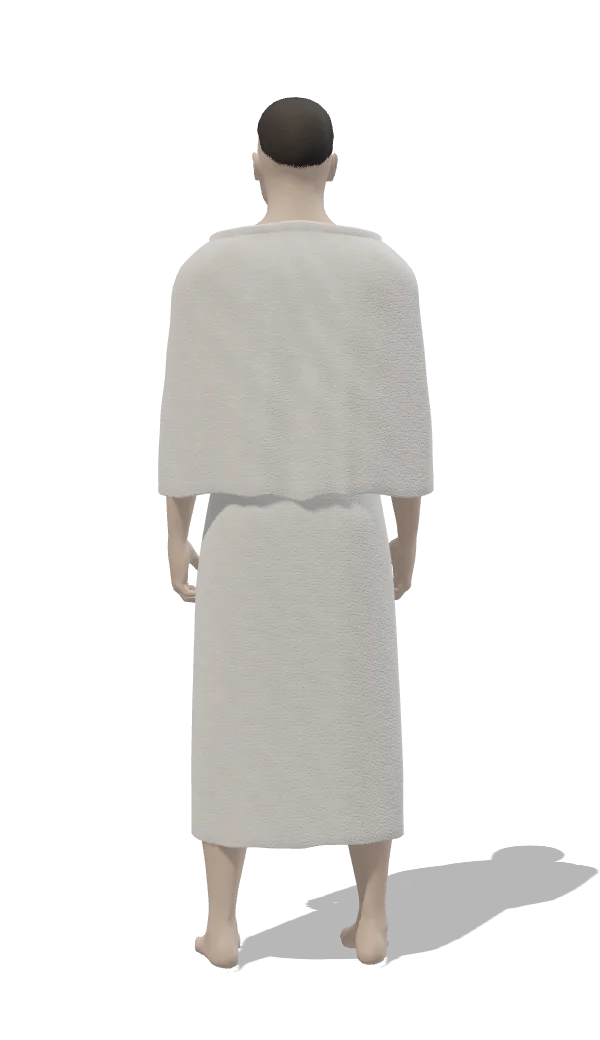 Back
- Lay the middle of the cloth across your back and over both shoulders, with the ends hanging in front.
- Draw the ends across the chest so that the back, both shoulders and the chest are covered.
- Leave the head bare. This is how the rida is worn all the way, except during tawaf.
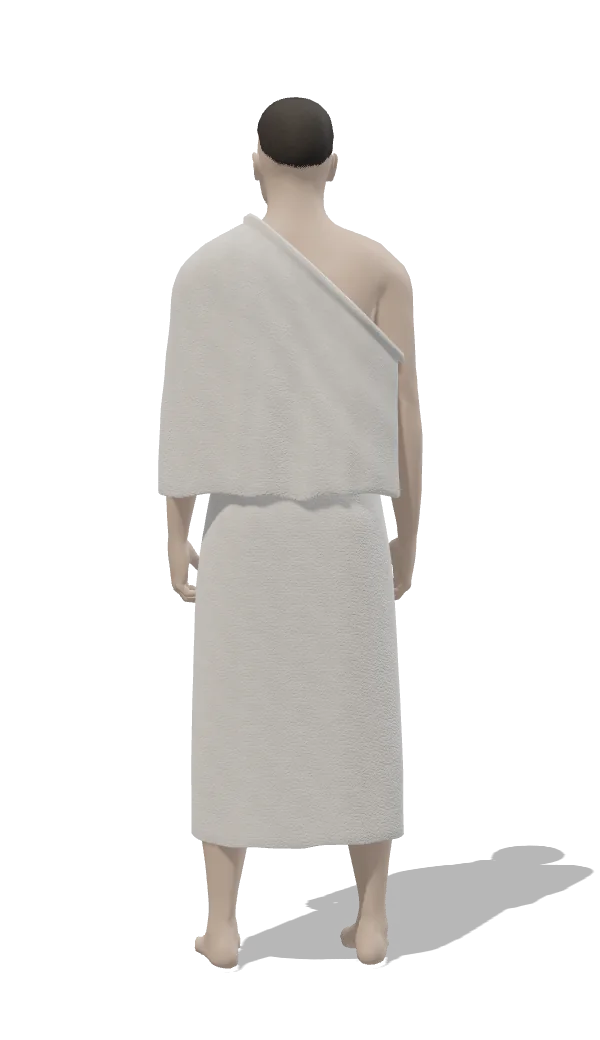
Idtiba': the right shoulder uncovered, in tawaf onlyFor men
Idtiba' is a sunnah for men in the tawaf of Umrah. It begins as you are about to start the first circuit and lasts for all seven.
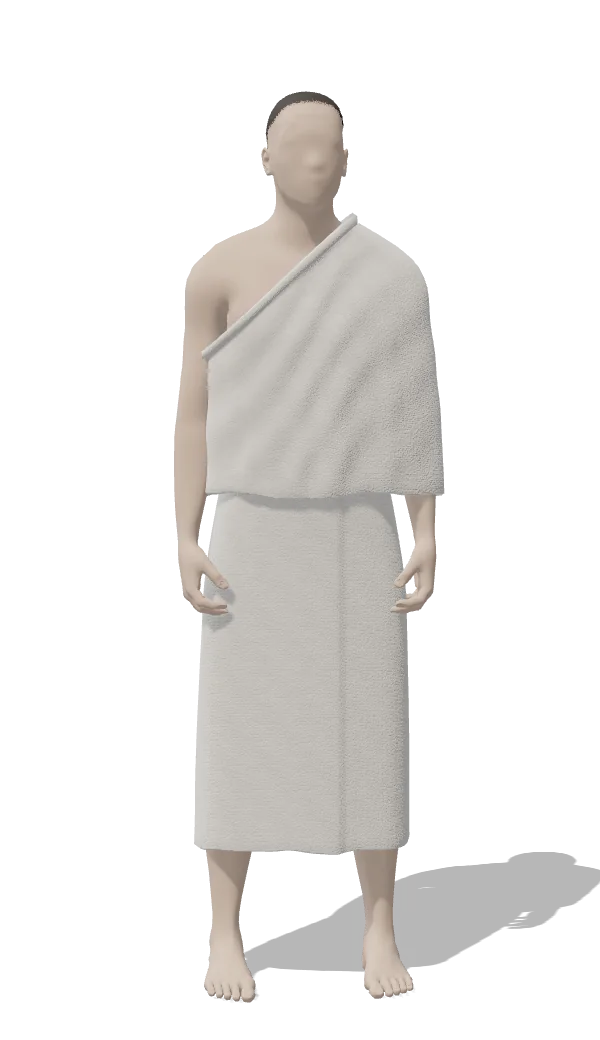 123Front
 Back
- Right shoulder uncovered
- Rida under the right armpit
- Both ends over the left shoulder
- Take the rida off the right shoulder and pass it under the right armpit.
- Throw both ends over the left shoulder.
- The right shoulder and upper arm are uncovered; the left shoulder is covered; the izar is as before.
Sunan Abi Dawud 1883, 1884
After tawaf: both shoulders covered againFor men
- As soon as the seventh circuit ends, bring the rida out from under the right arm and back over the right shoulder.
- Pray the two rak'ahs with both shoulders covered.
- Keep both shoulders covered through sa'i and until the hair is cut. Idtiba' is not required in sa'i: the guidance given at the Grand Mosque keeps it to tawaf, while the Shafi'i school also recommends it in sa'i.
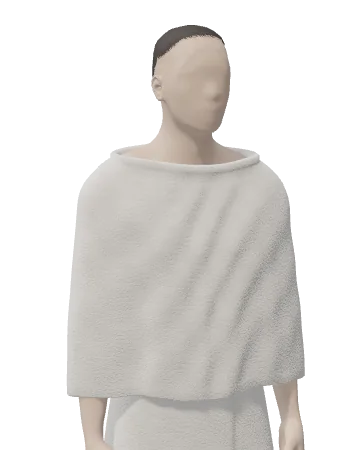 Miqat to the Black StoneBoth shoulders covered
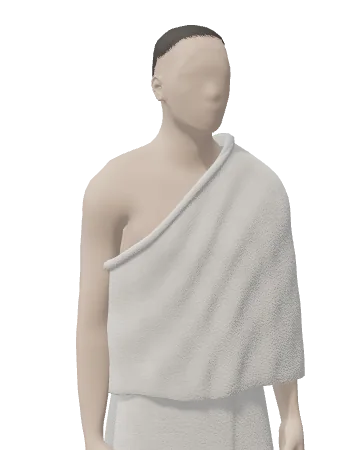 Tawaf: seven circuitsIdtiba': right shoulder uncovered
- Two rak'ahs, Zamzam, sa'i, hairBoth shoulders covered
Sahih al-Bukhari 359
How a woman dresses for ihramFor women
Front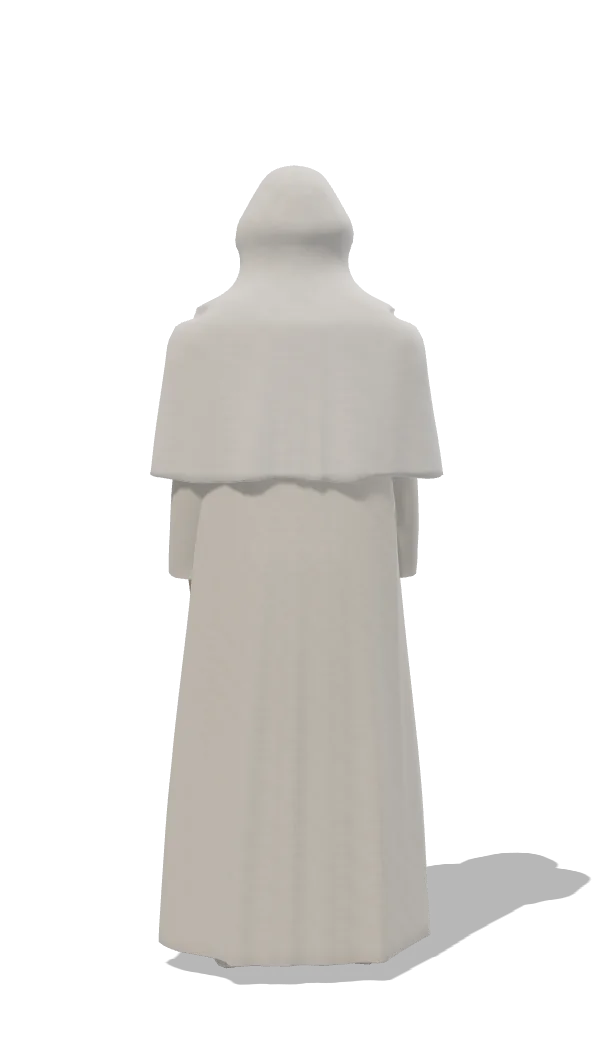 Back
- Wear your ordinary modest clothes: loose, covering the whole body and the hair, without adornment. Any colour is allowed; white or green is not required.
- Do not wear the niqab or gloves while in ihram. To screen your face from men who are not mahram, let part of your head covering hang down over it.
- Stitched clothes, socks and shoes are allowed.
- There is no idtiba', no raml and no running for women. Shoulders and arms stay covered at every step.
- At the end, gather the hair and cut about a fingertip's length from its ends. Women do not shave the head.
Sahih al-Bukhari 1838; Sunan Abi Dawud 1985
What may not be worn in ihram
Men
- Clothes tailored to the body: shirt, vest, trousers, underwear.
- Anything worn on the head: a cap, a turban, or the rida pulled over it.
- Socks, and shoes that cover the ankles. Sandals are worn.
Women
- The niqab.
- Gloves.
Everyone
- Clothing that has been perfumed.
A belt, a money belt and an umbrella are allowed. Stitches are not the issue: what a man avoids is clothing shaped to the body.
Sahih al-Bukhari 1542, 1838; Sahih Muslim 1177
Common mistakes
- Keeping the right shoulder uncovered from the miqat, or for the whole Umrah. Idtiba' is for the seven circuits of tawaf only.
- Praying the two rak'ahs after tawaf with the right shoulder still uncovered.
- Carrying idtiba' on into sa'i.
- Believing that wearing the cloths is the ihram, or that they may not be changed or washed.
- Men: underwear or a vest under the cloths, a cap on the head, or an izar so loose that it slips.
- Women: wearing the niqab or gloves in ihram, or believing a special colour is required.
- Changing into ordinary clothes before the hair is cut.
Sources
- Sahih al-Bukhari 359, 1542, 1838; Sahih Muslim 516, 1177
- Sunan Abi Dawud 1883 and 1884 (idtiba'), 1985 (women shorten the hair)
- Violations During Hajj, 'Umrah and Visitation, the Presidency of Religious Affairs at the Grand Mosque and the Prophet's Mosque
- Umrah and Visit Guide, the Saudi Ministry of Hajj and Umrah
- Shaykh Muhammad ibn Salih al-'Uthaymin on the mistakes made in ihram; Ibn Qudamah, al-Mughni, and an-Nawawi, al-Majmu', on idtiba' in sa'i